


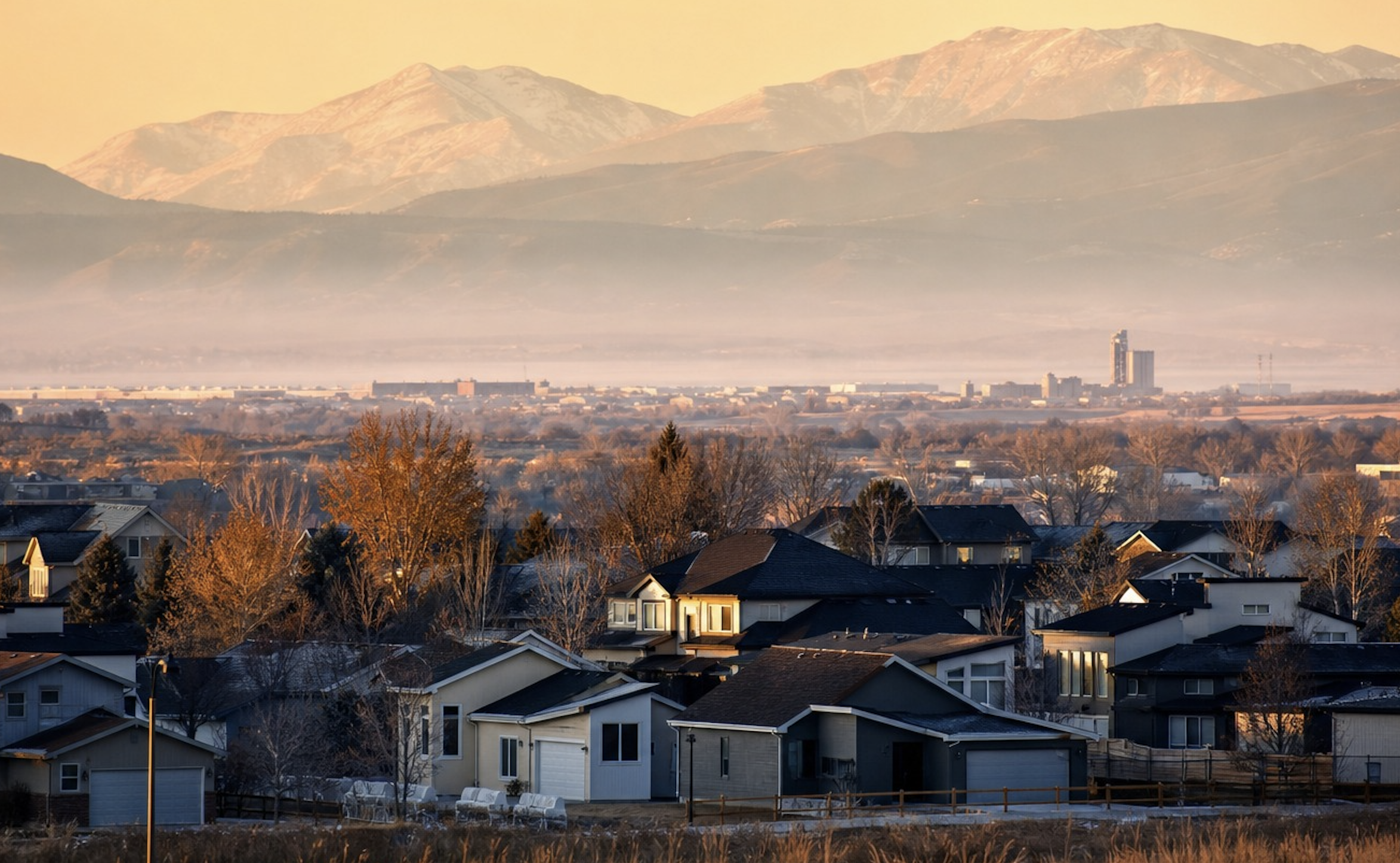
 What Amazon's Arrival Means for the Loveland Rea Estate Market.
What Fall 2026 Buyers Need to Know
Is now a good time to buy in Loveland, Colorado?
For buyers who’ve been sitting on the sidelines, fall 2026 is the most buyer-friendly Loveland market in several years. Inventory has loosened, homes are sitting longer before they go under contract, and sellers in a lot of price bands are willing to negotiate.
Then there’s Amazon. The new fulfillment center at 6425 Byrd Drive opened in September 2026 and already has roughly 1,100 workers on site. That gives Loveland buyers near-term opportunity and a stronger long-term employment base at the same time. Whether you buy now, wait, or zero in on a specific price range comes down to how those two things line up with your own timeline and budget. Let me walk you through it.
| • | Amazon’s Loveland fulfillment center opened in September 2026 with about 1,100 workers and the potential to grow to around 3,000 over time, a durable new employment anchor for the local housing market |
| • | At 3.5 million square feet, the facility at 6425 Byrd Drive is one of the largest single employment sites in Northern Colorado |
| • | The facility opened in September and the latest Loveland housing data runs through August 2026, so there’s no verified post-opening price comparison yet. Amazon’s effect on values is a forward-looking factor, not a confirmed one |
| • | Buyers who wait for Amazon’s full hiring ramp-up to play out may end up competing in a tighter market, which makes a reasonable case for acting before that demand is fully priced in |
| • | Negotiation room varies a lot by price band, and a current market analysis is how you find out which segments have the most flexibility right now |
What does Loveland’s current inventory mean for buyers?
More homes on the market means more choices. More importantly, it means less pressure to waive contingencies or overbid just to get an offer accepted. That’s a real shift from what buyers dealt with in 2021 and 2022.
Here’s how I think about supply. Below roughly two months, sellers hold almost all the leverage. As it climbs toward three months and beyond, the balance tips. Buyers can ask for inspection repairs, negotiate on price, and take a breath before signing.
Loveland heading into fall 2026 sits in that transitional zone. It’s not a full buyer’s market by historical standards, but it’s meaningfully more balanced than it has been. The headline inventory number doesn’t tell the whole story, though. Days on market, list-to-sale price ratios, and how long a specific home has been sitting matter just as much, and that’s exactly what I walk my clients through when we build an offer strategy.
For a broader look at how this balance is playing out across the region, see my post on whether Northern Colorado real estate is finally balancing.
Which price bands have the most negotiation room?
Not every segment of the Loveland market behaves the same way. Entry-level homes priced for first-time buyers still see competition even with inventory up, because demand at that price point stays fairly steady. Move-up and upper-mid-range homes usually carry more days on market and more seller flexibility, simply because the buyer pool is smaller.
Your actual negotiating position comes down to the home’s condition, how long it’s been listed, and whether the seller has already cut the price. That’s the analysis I run before we write an offer. Knowing where a home sits against recent comparable sales tells you how much room you really have.
Are Loveland home prices declining in 2026?
The honest answer: it’s nuanced. More inventory and longer days on market put downward pressure on prices. But Loveland’s underlying demand, driven by population growth, in-migration from pricier Front Range markets, and now Amazon’s employment base, keeps that pressure from turning into a freefall.
What buyers are more likely to see is selective softening. Overpriced homes and homes that need work sit longer and eventually reduce. Well-priced, move-in-ready homes still move relatively quickly.
The National Association of REALTORS® tracks these supply and demand dynamics nationally, and what’s happening in Loveland mirrors the pattern NAR has flagged across mid-size Western markets: more balance, not a crash.
How does Amazon’s Loveland facility change the decision to buy?
Amazon’s fulfillment center is a genuine demand driver. It’s worth understanding what it actually means before you factor it into a purchase.
According to The Coloradoan, Amazon expected the Loveland facility to employ more than 1,000 people at opening, with the potential to eventually reach about 3,000. The building itself is roughly 3.5 million square feet, which puts it among the largest single employment sites in Northern Colorado. Construction Review Online reported that packages were already moving through the facility in July 2026, and roughly 1,100 workers were on site during the September opening period.
I covered the broader housing picture in my post on the Amazon Loveland fulfillment center and NoCo housing demand. Here’s the short version for buyers making a decision right now.
Should you buy near the Amazon facility or farther away?
Being close to a major employer matters for your commute. It doesn’t automatically mean higher resale value. The facility sits at 6425 Byrd Drive, and Loveland’s road network puts most of the city within a reasonable drive of that address.
Buying right next to a large distribution facility also comes with trade-offs. Truck traffic, noise, and industrial neighbors are things some buyers will weigh differently than others.
What matters more is what Amazon does for the Loveland market as a whole. A stable, growing employer base supports housing demand across the city. Bureau of Labor Statistics Mountain-Plains region data consistently shows that employment anchors go hand in hand with housing stability in mid-size markets, and a facility this size is a meaningful addition to Loveland’s economic foundation.
Should you wait until Amazon’s full workforce is in place?
This is the question I hear most right now. Here’s the honest answer: waiting for certainty means waiting until the demand is already priced in.
The facility opened in September 2026. The latest Loveland housing data available runs through August 2026, so there isn’t a verified post-opening price comparison yet. But the jobs are real and the building is operating. Growth toward roughly 3,000 employees isn’t on any published schedule, but it’s a reasonable planning assumption.
Buyers who act before that demand fully shows up are buying ahead of a potential tailwind. Buyers who wait for proof may end up competing in a tighter market at higher prices. Neither choice is wrong. It depends on your timeline, your financing, and your risk tolerance. The CFPB’s homebuying resources are a good starting point for thinking through the financial readiness side of that decision.
| Factor | What It Means for Buyers in Fall 2026 |
|---|---|
| Inventory level | More homes available than in recent years; buyers have real choices and less pressure to waive contingencies |
| Days on market | Homes are sitting longer in many price bands, which creates room to negotiate on price or ask for repairs |
| Amazon employment | ~1,100 workers on site at opening, with potential to reach ~3,000 over time; a real demand driver not yet reflected in the data |
| Price trajectory | Selective softening in overpriced or condition-challenged homes; well-priced, move-in-ready homes still moving relatively quickly |
| Negotiation room | Varies by price band and individual listing; a current market analysis is the only reliable way to know your actual leverage |
Sources: Amazon employment figures from The Coloradoan and Construction Review Online, 2026. Loveland housing data available through August 2026.
What should you actually do if you’re ready to buy in Loveland?
The market data tells you the conditions. It can’t tell you whether those conditions fit your situation: your financing, your timeline, the neighborhoods you’re targeting, and the price band you’re shopping in.
Here’s what I tell buyers who bring me this question. Get pre-approved before you start seriously looking. It isn’t a formality. Knowing exactly what you qualify for changes which price bands are realistic and how much negotiating room you actually have. A buyer who knows their number walks into every showing with clarity. A buyer who doesn’t is guessing.
From there, the conversation gets specific. These are the questions that turn general market conditions into a real offer strategy:
| • | Neighborhood fit: Which Loveland neighborhoods match your commute, your lifestyle, and your budget? |
| • | Seller motivation: Which listings have been sitting long enough that the seller is genuinely ready to deal? |
| • | Pricing: What do comparable sales say about where a home is priced relative to the market? |
The Colorado Division of Real Estate sets the standards for how real estate transactions are conducted in this state, and understanding your rights and protections as a buyer is part of making a confident decision. The Colorado Association of REALTORS® also publishes market data and consumer resources worth reviewing as you prepare.
If you want to see what’s actually available in your price range, browse current Loveland listings here. And if you’re ready to talk through whether now is the right time for your situation, schedule a consultation below and we’ll run the numbers together.
If you’d like to read what past clients have said about working with me, you can find my reviews on Google and Zillow.
Frequently Asked Questions
Is now a good time to buy in Loveland, Colorado?
Fall 2026 is one of the more buyer-friendly windows Loveland has seen in several years, with more inventory, longer days on market, and more negotiating room than the peak seller’s market of recent years. Whether it’s the right time for you depends on your financing, your target price range, and your timeline, and a current market analysis with a local agent will give you a much clearer picture than general conditions alone.
Will Amazon’s new Loveland fulfillment center increase home prices?
Amazon’s facility opened in September 2026 with about 1,100 workers on site and the potential to eventually employ around 3,000 people, according to The Coloradoan. A large, stable employer of this scale supports housing demand across the city, which tends to put upward pressure on prices over time. The facility opened too recently for verified post-opening price data to exist, so its effect on values is a forward-looking factor rather than a confirmed one.
Can buyers negotiate below asking price in Loveland right now?
In many price bands, yes. Homes that have been on the market for several weeks, homes with condition issues, and homes that came in overpriced against comparable sales all present real negotiating opportunities. There’s no blanket answer, though. Flexibility varies a lot from listing to listing, and the only reliable way to know your leverage on a specific home is to pull the comps and look at its days-on-market history.
What does 3.0 months of housing supply mean for Loveland buyers?
Around three months of supply puts the market in transitional territory: no longer the extreme seller’s market of 2021–2022, but not a full buyer’s market either. At that level, buyers generally have enough options to be selective, can include standard contingencies, and can negotiate on price or repairs on homes that have been sitting. Below two months, sellers hold most of the leverage; above six months, buyers do. Three months means both sides have real room to negotiate.
Should I wait until after Amazon opens before deciding to buy in Loveland?
Amazon’s facility opened in September 2026, so the opening has already happened. The real question now is whether to act before the facility’s full hiring ramp-up shows up in housing demand, or to wait for more data. Waiting for certainty usually means waiting until that demand is already priced in. If your finances and timeline are ready, acting in today’s more balanced market is a reasonable strategy. If you need more time, put that time into getting your financing in order rather than trying to time the market precisely.
The Bottom Line
Fall 2026 gives Loveland buyers more inventory, more time, and more negotiating room than they’ve had in years, with Amazon’s new facility adding a durable employment base underneath it all. The opportunity is real. How much of it applies to you depends on your price band, your financing, and your timeline.
I’m happy to pull the comps on the homes you’re watching and show you exactly where your leverage is. Or, if you’re ready to start exploring, search Northern Colorado listings here.
| Schedule a Consultation → |
|
About Christopher Fry Christopher Fry is an Associate Broker and REALTOR® with RE/MAX Alliance, serving buyers and sellers throughout Northern Colorado, including Loveland, Fort Collins, Windsor, Greeley, Timnath, Johnstown, Severance, Wellington, Eaton, Milliken, and Berthoud. With 13 years of real estate experience and hundreds of homes sold, Christopher combines expert marketing, strategic pricing, strong negotiation, and honest guidance to help clients move with confidence. He is consistently ranked among the top-performing agents in the region, including recognition with the RE/MAX 100% Club Award, and hosts “The Deep Dive,” a podcast covering Northern Colorado real estate and market trends. Learn more at FryRealEstate.net. RE/MAX Alliance · 970-218-5248 |
Equal Housing Opportunity. This article is provided for general informational purposes only and does not constitute legal, tax, or financial advice. Confirm your specific numbers with your title company, tax advisor, or lender before making any transaction decision.