


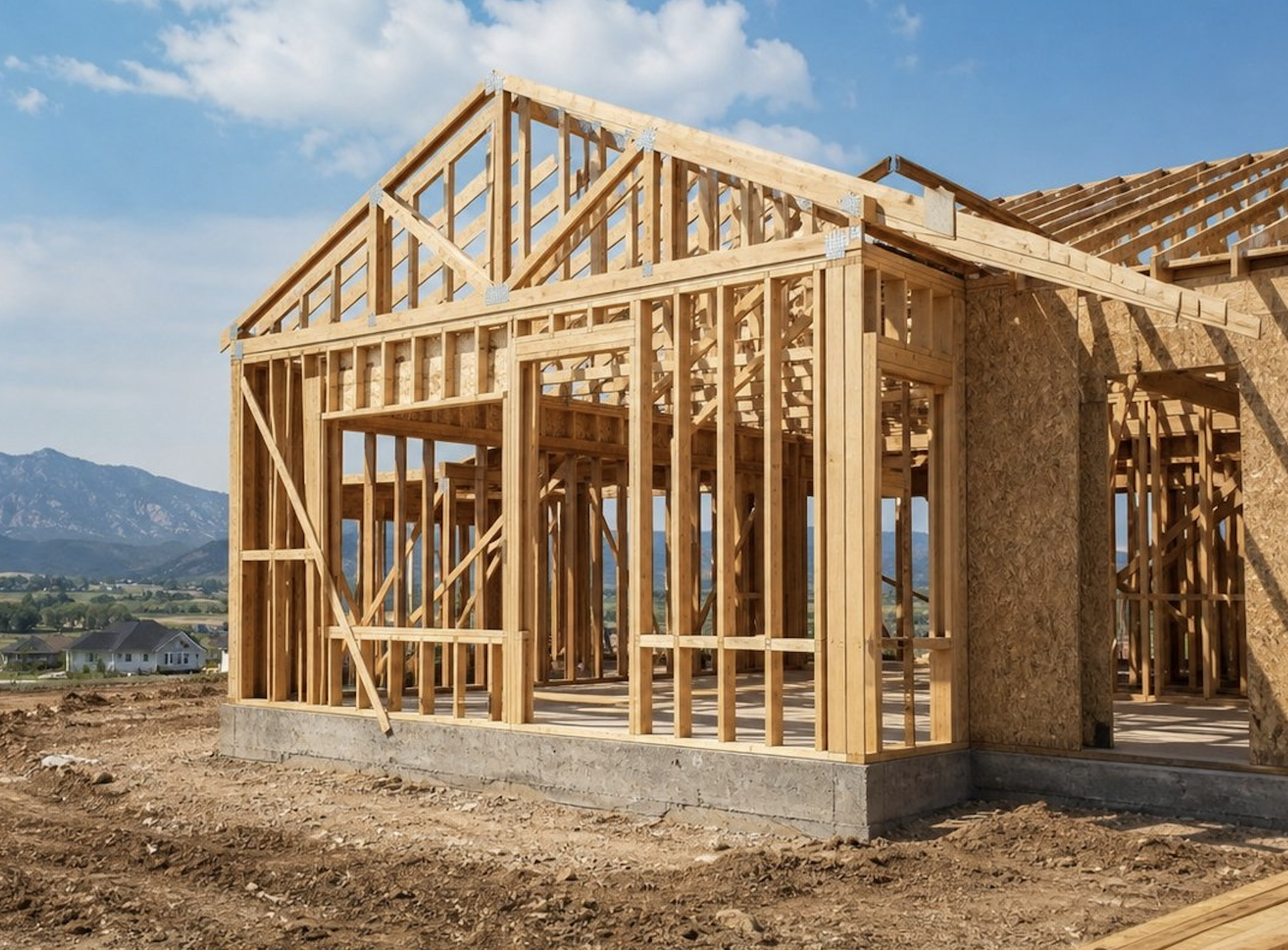
 New Construction in Northern Colorado: The Buyer Checklist
What should you check before buying new construction in Northern Colorado?
Check four things before you sign with a builder: the specific homesite, the builder’s written contract and specification sheet, the status of the community’s shared improvements, and the permit and inspection record with the city that governs the lot. Get your financing lined up first, then tour early so you’re comparing real lots and real homes, not just a floor plan.
Fort Collins, Windsor, Loveland, and Greeley each run their own permitting process. A rule in one city doesn’t carry over to the next. Let me walk you through the checklist I use with my buyers, in the order it actually matters.
If you want the full picture first, including builder incentives, representation, upgrades, inspections, financing, HOAs, and metro districts, start with my New Construction Buyer Guide for Northern Colorado.
| • | Permit timing isn’t move-in timing. Greeley lists 20 working days as the typical review time for new residential construction permits. That’s a municipal review estimate, not a promise of your move-in date. |
| • | The lot matters as much as the plan. Grading, drainage, easements, and the lot’s position change how usable your yard and driveway really are. |
| • | The model isn’t the base price. Model homes often show options that aren’t in the advertised price, so get a written specification sheet for every feature you’re counting on. |
| • | City inspections check code. They don’t replace an independent inspection focused on workmanship and how the home operates. |
| • | There’s no single permitting office. Fort Collins, Windsor, Loveland, and Greeley each set their own rules, so confirm them with the authority that governs your lot. |
How do you evaluate the homesite and community?
Start with the lot, not the plan. Ask for lot-specific information on grading, drainage, utilities, easements, retaining walls, fences, and landscaping. Then go walk the actual homesite.
In 2026, buyers have plenty of floor plans to choose from. The plan is the easy part. The lot is the part you can’t change later.
What should you ask about the homesite itself?
Ask what the lot’s position does to your daily life. A homesite can change your usable yard, privacy, sunlight, driveway layout, and how much construction you’ll live next to after you move in.
| • | Grading and drainage: Which way does water move on the lot and around it? |
| • | Easements and utilities: Where do they sit, and what can’t you build or plant over them? |
| • | Retaining walls, fences, and landscaping: What’s included, and who maintains it? |
| • | Neighboring lots: Which ones are still unbuilt, and what’s planned for them? |
Is the community finished, or still being built?
Check the community separately from your house. Confirm whether roads, sidewalks, streetlights, utilities, parks, and open space are complete, bonded, or still waiting on municipal approval. The city or county planning and building department can tell you where permits and development review stand.
Fort Collins, for example, may require development review for new construction or major site changes. A lot’s grading, drainage, access, and infrastructure status can move your timeline on its own, apart from the house. If the community has a homeowners association, read those rules too. I cover that in Homeowner Associations in Fort Collins Before You Buy.
Which city’s rules apply to your lot?
Whichever city or county has jurisdiction over the lot. Verify it before you fall in love with a plan. Windsor, Loveland, Fort Collins, and Greeley each handle permits, inspections, adopted codes, utility responsibilities, and occupancy requirements their own way.
Fort Collins applies the 2024 International Codes with local amendments to newer permit submittals. Ask the builder which code edition governed your home’s permit and whether the plans have final approval. Greeley has its own permit and inspection process. For Windsor and Loveland, confirm the details with that town’s or city’s building department rather than assuming a neighbor’s rules apply.
What should you review in the builder’s contract, base price, and upgrades?
Get the base price, the specification sheet, and the full contract in writing before you pay for a single upgrade. A builder’s contract isn’t the same document as a standard resale contract. Read it for deadlines, cancellation rights, and what happens to your upgrades if the deal falls apart.
What’s actually included in the base price?
Ask for a written specification sheet that separates what’s included, what’s an upgrade, which selections lock after a deadline, and whether allowances let you substitute items or require extra payment.
Model homes are built to impress. They often carry options that aren’t part of the advertised base price, so photograph what you see and tie each feature to the written spec. If a feature isn’t on the sheet, don’t assume it’s in the house.
Which contract terms deserve the closest read?
These are the provisions I’d have you compare line by line before you put down earnest money.
| Contract Item | What to Look For | Why It Matters |
|---|---|---|
| Earnest money | Deadline and refund conditions | Defines how much you have at risk, and when |
| Cancellation rights | When you can walk away and what you keep | Protects you if circumstances change |
| Financing and appraisal terms | What happens if the appraisal or loan falls short | Sets your exit options |
| Change orders | Rules for pricing and approving changes | Controls surprise costs mid-build |
| Completion date | How “complete” is defined and what counts as a delay | Affects your move, rate lock, and housing plans |
| Default remedies | What each side can do if the other defaults | Shows who carries the risk |
| Inspection and warranty | Access, notice requirements, and claim procedure | Determines how problems get fixed |
| Upgrades if canceled | Whether paid-for options are refundable | Keeps selections from becoming sunk costs |
If the builder misses the promised completion date, your remedy depends entirely on this language. Read the construction-delay and completion-date definitions before you sign, not after.
Which upgrades are worth paying for?
Put your money into what’s hard to change once the home is built. Structural changes, electrical capacity, plumbing locations, insulation, and windows deserve more scrutiny than paint, flooring, fixtures, and cabinet finishes. Those you can usually change later.
Compare each upgrade’s contract price with what it would cost to renovate later. Upgrade pricing also feeds your loan, so treat it as part of your financing decision. Ask whether the builder requires an affiliated lender, whether incentives depend on using that lender, and whether the incentive changes your rate, fees, or cash to close. For a broader look at how the purchase unfolds, see New Construction Process in Northern Colorado for Buyers.
When should you get pre-approved, tour, and schedule inspections?
Get pre-approved before you spend time on selections. Tour as soon as a community interests you. And book an independent inspection, even though the home is brand new.
Why pre-approval comes before design selections
A pre-approval gives you a purchase-price range and surfaces documentation issues before you’re working against a builder’s deadlines. Picking finishes without a number in hand is how buyers get attached to a budget they can’t finance. If you’re still sorting out your down payment, start with Down Payment in Northern Colorado: What You Actually Need and First-Time Home Buyer Programs in Northern Colorado.
Why tour early
If a community catches your eye, go see it. A visit shows you how the model, the available homesites, the construction stage, nearby finished homes, roads, drainage, and noise fit together. No brochure does that.
Before your first visit, ask the builder how they handle buyers who bring their own agent. I’d rather be there with you from the start than try to add representation after you’ve signed something.
Why a new home still needs its own inspection
The city inspects for code compliance. It doesn’t evaluate workmanship, how systems operate, or whether the home meets your contract. Ask the builder when pre-drywall, insulation, final, and warranty inspections are allowed, and whether the contract restricts access or requires advance notice.
Then verify the paper trail. In Fort Collins, required inspections and closeout documents must be completed before the permit is closed. Before closing on any build in the region, ask for:
| • | Permit and inspection records for the home |
| • | The occupancy approval, whether that’s a certificate or another required sign-off |
| • | Final plans or specifications |
| • | Appliance and system manuals, plus warranty contacts |
| • | Written confirmation that unresolved correction items have been addressed |
Fort Collins also confirms that most construction projects require permits, so ask the builder to confirm theirs. In Greeley, the city lists 20 working days as the typical review time for new residential construction. Project submittals are typically scheduled for a two-week review, with the first round generally taking three weeks. Keep that municipal timing separate from your builder’s construction schedule. The two don’t move together.
If you’re looking at a specific community, my breakdown of what buyers should expect from Timnath new construction shows how these checks play out on the ground. Every lot and every builder contract is different, and that’s where a walk-through with me saves you from the expensive surprises.
If you’d like to read what past clients have said about working with me, you can find my reviews on Google and Zillow.
Frequently Asked Questions
What should I ask about a new-construction homesite?
Ask for lot-specific grading, drainage, utility, easement, retaining-wall, fence, and landscaping information. Also ask what’s planned for neighboring lots and whether community roads and shared improvements are complete or still waiting on municipal approval.
Should I get pre-approved before touring a new-construction community?
Yes, get pre-approved before you start choosing selections. A pre-approval gives you a price range and flags documentation issues before you’re working against a builder’s deadlines. You can still tour early. Just know your number before you pay for options.
Do I need my own real estate agent when buying from a builder?
You can buy without one, but the builder’s sales team works for the builder, not for you. Your own agent reviews the contract, specifications, and homesite from your side of the table. Agent compensation is fully negotiable and not set by law, and I’m happy to explain how it works in a consultation. My New Construction Buyer Guide covers representation in more detail.
What inspections should I arrange for a newly built home?
Ask the builder when pre-drywall, insulation, final, and warranty inspections are allowed, and whether the contract limits access or requires notice. City inspections check code compliance. An independent inspection looks at workmanship and how the home operates.
What happens if the builder misses the promised completion date?
It depends on the contract’s construction-delay language and how it defines completion. Read those provisions, along with the default remedies and your cancellation rights, before you sign. A city’s permit review estimate is not a construction deadline.
The Bottom Line
New construction in Northern Colorado goes well when you check the lot, the contract, the spec sheet, and the city’s closeout records before you commit. Not after.
I walk buyers through all of it, from pre-approval to the final walk-through. Schedule a consultation and we’ll go through your target communities together. If you’d rather explore on your own first, my New Construction Buyer Guide has new homes for sale across the region, or you can search Northern Colorado homes here and send me the ones you want to tour.
| Schedule a Consultation → |
|
About Christopher Fry Christopher Fry is an Associate Broker and REALTOR® with REMAX Alliance, serving buyers and sellers throughout Northern Colorado, including Windsor, Fort Collins, Loveland, Greeley, Timnath, Johnstown, Severance, Wellington, Eaton, Milliken, and Berthoud. Licensed since 2014 with 170+ homes sold, Christopher specializes in first-time buyers, move-up buyers, downsizing, relocation, and new construction, and is consistently ranked among the top-performing agents in the region, including recognition with the REMAX 100% Club Award. He also hosts “The Deep Dive,” a podcast covering Northern Colorado real estate, market trends, and practical advice for buyers and sellers. REMAX Alliance · 970-218-5248 |
Equal Housing Opportunity. This article is provided for general informational purposes only and does not constitute legal, tax, or financial advice. Builder contracts, permit timelines, and building department procedures vary by builder and jurisdiction and are summarized, not quoted in full. Confirm your specific numbers and contract terms with your title company, tax advisor, or lender before making any decisions.