


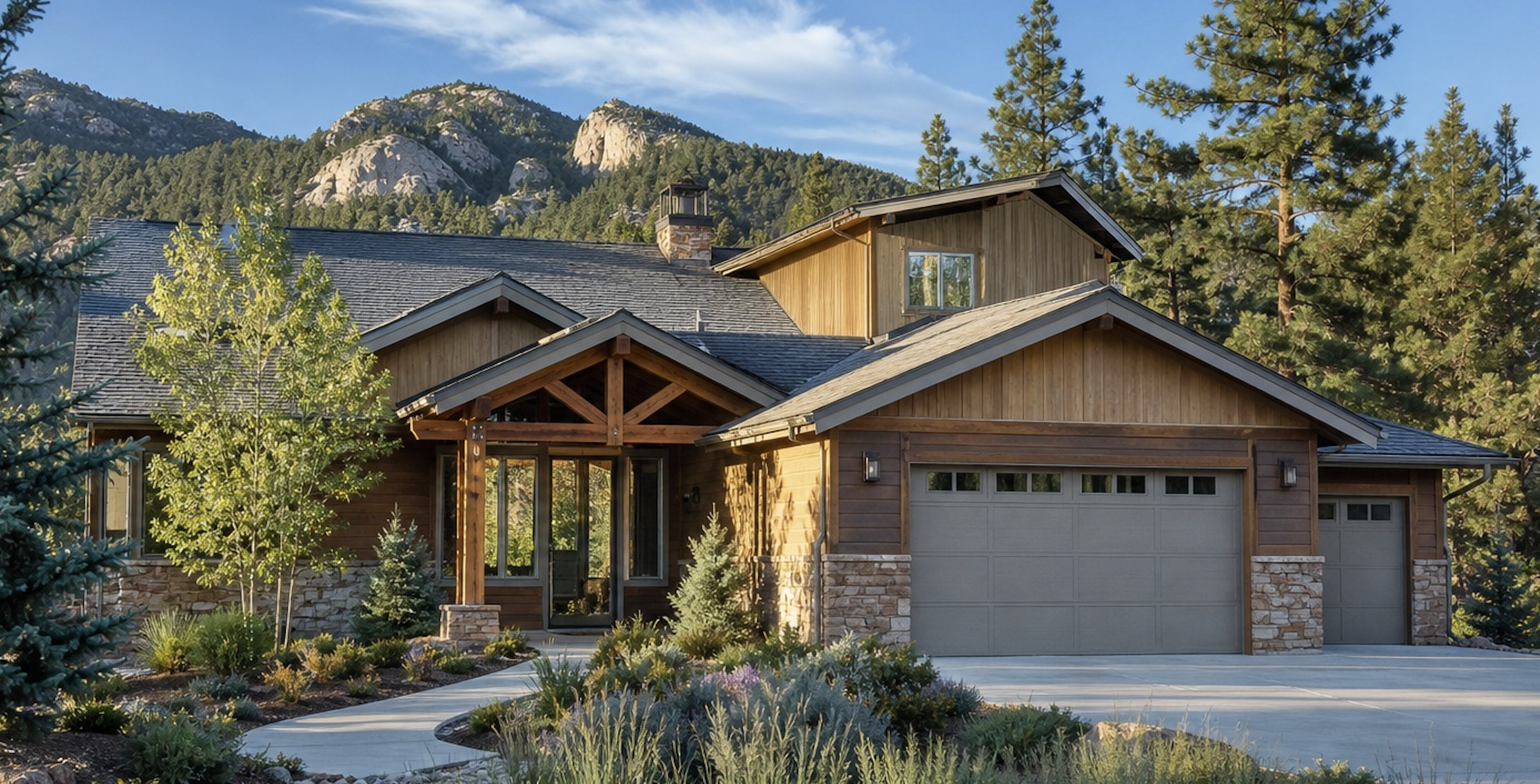
 Detached Home or Townhome? What Northern Colorado Buyers Should Weigh in 2026
Should Northern Colorado buyers choose a detached home or an attached property in 2026?
Statewide Colorado data through August 2026 shows single-family homes holding their value better than condos and townhomes, which are sitting on the market longer and pricing softer. For Northern Colorado buyers, the right choice comes down to your full monthly cost, how long you plan to stay, and whether the resale audience for that property type works in your favor. The list price is only the starting point.
This is one of the most common conversations I have with buyers right now, and the fastest way to get a real answer is to run the numbers on your specific situation. Let me walk you through what the data says first.
| • | Colorado’s statewide attached-home median price fell 3.8% year over year to $375,000 in August 2026, while the single-family median held essentially flat at $622,500, according to the Colorado Association of REALTORS® |
| • | Townhome and condo sales statewide dropped 18% year over year in August 2026, compared with a 13.3% decline for single-family sales, so attached housing is carrying more volume pressure |
| • | Colorado’s attached segment entered spring 2026 with 5.1 months of supply and an average of 68 days on market, with high HOA dues and insurance costs cited as contributing factors |
| • | The lower purchase price of an attached home can disappear quickly once you add HOA dues, insurance, and potential special assessments to the monthly payment, so compare the full ownership burden, not just the list price |
| • | Detached homes typically appeal to a broader resale audience, which matters when it’s time to sell, especially in a slower market |
What does Colorado’s 2026 housing data say about single-family vs. attached homes?
The picture is pretty clear. According to the Colorado Association of REALTORS® September 2026 report, single-family home sales were down 13.3% year over year in August 2026, with a median price essentially flat at $622,500. That’s a market that’s cooling but holding its ground on price.
The attached segment tells a different story. Townhome and condo sales fell 18% year over year, and the statewide attached-home median dropped 3.8% to $375,000. More inventory, longer waits, softer prices. That gap is what buyers need to understand before they decide which direction to go.
Earlier in the year, the split was even more pronounced. The Colorado Association of REALTORS® April 2026 report showed the attached segment entering the spring selling season with 5.1 months of supply and an average of 68 days on market, and it specifically called out high HOA dues and insurance costs as factors weighing on attached-home demand. By July 2026, The Denver Post’s coverage of the June CAR report described the condo and townhome median as flat year over year at around $405,000, while the single-family median had ticked up roughly 2% to approximately $606,500.
One important note: these are statewide Colorado figures. They tell us which property type is under more pressure, but they don’t tell us exactly what’s happening in Fort Collins, Loveland, Windsor, Greeley, or Berthoud. Northern Colorado has its own supply dynamics, its own new-construction pipeline, and its own buyer pool. I track those numbers closely, and if you want a local breakdown, that’s exactly the conversation worth having before you start shopping.
How the statewide split plays out in Northern Colorado
The same forces shaping the statewide attached market are showing up here too: rising HOA dues, higher insurance premiums, and longer marketing times. Larimer and Weld counties have also seen meaningful new-construction townhome supply come online over the past few years in communities like Timnath, Johnstown, and Severance. That affects how attached properties compete with each other, and with detached homes in similar price ranges.
Not all attached housing performs the same, though. A fee-simple townhome in a well-managed Windsor association is a very different proposition than a condo in an older complex with deferred maintenance and rising dues. The statewide data captures a broad trend. Your specific property and HOA matter just as much.
| Market Indicator | Single-Family (Statewide CO) | Attached Homes (Statewide CO) |
|---|---|---|
| Median Sale Price (August 2026) | $622,500 | $375,000 |
| Year-Over-Year Price Change (August 2026) | Essentially flat | Down 3.8% |
| Year-Over-Year Sales Volume Change (August 2026) | Down 13.3% | Down 18% |
| Months of Supply (March 2026) | Not separately reported | 5.1 months |
| Average Days on Market (March 2026) | Not separately reported | 68 days |
| Average Days on Market, All Types (June 2026) | 56 days statewide (up from 52 a year earlier) | |
Sources: Colorado Association of REALTORS®, September 2026; Colorado Association of REALTORS®, April 2026; The Denver Post, July 2026. Statewide figures, not Northern Colorado-specific.
How should Northern Colorado buyers choose between a detached home and a townhome or condo?
I walk buyers through this question all the time, and it almost never comes down to purchase price alone. Here’s how I frame it.
Start with the full monthly cost, not the list price
A townhome listed $150,000 below a comparable detached house looks like an obvious win. Then you add the HOA dues, the homeowners insurance (which has climbed significantly for attached properties in Colorado), and any special assessments the association is carrying. The Colorado Association of REALTORS® specifically flagged HOA dues and insurance as factors suppressing attached-home demand in 2026. That’s no coincidence. Buyers are doing this math and finding the gap is narrower than the list price suggests.
Before you fall for an attached property’s price, I want to see the full HOA financials: monthly dues, reserve fund balance, pending special assessments, and the association’s history of fee increases. That’s the picture of what you’re actually buying. The National Association of REALTORS® and the Consumer Financial Protection Bureau’s mortgage resources both offer guidance on what to look for in HOA documents.
For a deeper look at what goes into your total purchase costs, my post on the cost to buy a home in Northern Colorado in 2026 breaks down what to budget beyond the down payment.
Think about the resale audience
Detached homes appeal to a broader pool of buyers. Families who want a yard, buyers who don’t want shared walls, people who want the option to add a garage or finish a basement. They’re all shopping the detached market, and that wider audience generally means more competition when you sell, which supports price.
Attached homes have a narrower buyer pool by nature. That’s not a deal-breaker, but it belongs in the math. If you plan to stay five years or more, a townhome in a well-located, well-managed community can still be a solid move. If your timeline is shorter or uncertain, the resale risk goes up, especially with statewide data showing attached inventory sitting longer and pricing softer.
The NAR’s 2026 Home Buyer and Seller Generational Trends report is worth a look if you want to see what different buyer segments are prioritizing. It reinforces why detached homes tend to draw a wider audience across age groups.
Match the property type to your actual life
This is where I push buyers to be honest with themselves. If you hate yard work, travel often, and want lock-and-leave convenience, a townhome might genuinely be the better fit, HOA dynamics and all. If you want a dog, a garden, room to park a trailer, or the option to build an ADU someday, a detached home gives you flexibility no attached property can match.
The Northern Colorado market has shifted toward more balance in 2026, so buyers have more negotiating room than they did two or three years ago in both property types. That’s a better environment for making a thoughtful decision instead of a reactive one.
A practical framework for the decision
When you strip it down, the choice comes down to three things: your full monthly ownership cost, your realistic timeline, and your honest lifestyle priorities. Here’s a quick way to frame it:
| • | Choose a detached home when long-term flexibility, land ownership, privacy, and a broader resale audience matter more to you than a lower entry price or shared maintenance. |
| • | Consider a townhome or condo when the lower purchase price, reduced exterior maintenance, location, or amenities genuinely fit your lifestyle, and you’ve carefully reviewed the HOA’s financial health, fee trajectory, and reserve funding. |
| • | In either case, run the full monthly ownership cost, not just the mortgage payment. Once you account for all carrying costs, the difference between property types often narrows, and sometimes reverses. |
If you’re weighing these options and want to see how the numbers actually compare on specific Northern Colorado properties, that’s exactly the analysis I do in a buyer consultation. No pressure, just real numbers for your situation.
Also worth reading before you start: my breakdown of what you actually need for a down payment in Northern Colorado. Requirements differ by loan type and property type, and that affects which direction makes sense financially.
For the bigger picture, the Colorado Association of REALTORS® publishes monthly statewide market updates, and NAR’s existing-home sales data shows how Colorado’s trends compare nationally. I’d also point buyers to the CFPB’s homebuying resources for an objective look at how HOA obligations interact with mortgage qualification. That one trips up more buyers than you’d expect when they’re comparing property types.
And if you want to know how long the buying process typically takes once you’ve settled on a property type, my post on how long it takes to buy a house in Northern Colorado walks through the full timeline from pre-approval to closing.
If you’d like to read what past clients have said about working with me, you can find my reviews on Google and Zillow.
Frequently Asked Questions
Are townhomes or detached homes a better buy in Northern Colorado right now?
Detached homes are showing stronger price stability and broader buyer demand statewide in 2026, but “better” depends on your budget, lifestyle, and timeline. Townhomes carry a lower entry price but come with HOA dues, insurance costs, and a narrower resale audience, all factors the Colorado Association of REALTORS® specifically identified as weighing on attached-home demand this year. The right answer for your situation comes from looking at specific properties and running the full monthly cost comparison.
Do condos and townhomes take longer to sell than single-family homes in Fort Collins or Loveland?
Statewide Colorado data through early 2026 showed attached homes averaging 68 days on market with 5.1 months of supply, longer marketing times than the overall market. Whether that gap holds precisely in Fort Collins or Loveland depends on the specific submarket, price point, and property condition. Still, the directional trend toward slower sales for attached properties has been consistent across Colorado’s 2026 reports.
Which usually holds value better in Northern Colorado: a detached house or a townhome?
Detached homes have generally held value better in 2026 Colorado data. The statewide single-family median was essentially flat year over year in August 2026, while the attached median fell 3.8%. Detached homes appeal to a broader buyer pool, which supports price in a slower market. Townhomes and condos can hold value well in well-located, well-managed communities, but their resale is more sensitive to HOA health, dues levels, and insurance costs.
How much do HOA dues affect the resale value of a Colorado condo or townhome?
HOA dues directly affect how many buyers can qualify for and afford the property. That narrows the resale audience and can suppress price, especially when dues are high or rising. The Colorado Association of REALTORS® cited high HOA dues and insurance costs as specific factors weighing on attached-home demand in its spring 2026 reports. Before buying, review the association’s reserve fund, fee history, and any pending special assessments, because those numbers follow the property to the next buyer.
What should buyers check in an HOA before purchasing a townhome or condo?
At minimum, review the reserve fund balance, current monthly dues, history of fee increases, any pending or recently levied special assessments, and the governing documents for rental and pet restrictions. A well-funded reserve with stable dues signals a healthy association. A thinly funded reserve with dues that have jumped repeatedly is a warning. I walk every buyer through the HOA documents before we get too far into the process, because it’s one of the most important parts of evaluating an attached property.
The Bottom Line
Statewide, detached homes are holding their value in 2026 while condos and townhomes sit longer and price softer. That doesn’t make an attached home the wrong choice. It means the decision has to rest on your full monthly cost, your timeline, and the life you actually want to live in that home.
I’m happy to work through which property type fits you best. We’ll look at real properties, real numbers, and the right fit for your situation. Or, if you’re ready to start browsing, search current Northern Colorado listings to see what’s available in both property types right now.
| Schedule a Consultation → |
|
About Christopher Fry Christopher Fry is an Associate Broker and REALTOR® with RE/MAX Alliance, serving buyers and sellers throughout Northern Colorado — including Fort Collins, Loveland, Windsor, Greeley, Timnath, Johnstown, Severance, Wellington, Eaton, Milliken, and Berthoud. With 13 years of real estate experience and hundreds of homes sold, Christopher specializes in first-time buyers, move-up buyers, downsizing, relocation, and new construction, and is consistently ranked among the top-performing agents in the region, including recognition with the RE/MAX 100% Club Award. He also hosts “The Deep Dive,” a podcast covering Northern Colorado real estate, market trends, and practical advice for buyers and sellers. RE/MAX Alliance · 970-218-5248 |
Equal Housing Opportunity. This article is provided for general informational purposes only and does not constitute legal, tax, or financial advice. Confirm your specific numbers with your title company, tax advisor, or lender before making any decisions.